


By P.T. Bopanna
Leader of the opposition in Tamil Nadu assembly, Udhayanidhi Stalin, has once again kicked up a controversy with his statement on the floor of the house, that Hindu Sanatana Dharma divides the people in the name of caste and religion.
Sanatana is loosely defined to mean ‘eternal or unchanging’, often employed by those Hindus who view their faith as timeless, and believe in reincarnation, karma, and the Vedas.
Looked at from this yardstick, Kodavas are outside the purview of Sanatana Dharma because they do not believe in the concept of rebirth and such other parameters.
With the Bangalore Kodava Samaja located at Vasanthanagar, observing certain practices of Sanatana Dharma, a section of the Kodava (Coorg) community has showed its displeasure.
The latest incident involved a classical vocal recital by Sivasri Skandaprasad, wife of BJP MP Tejasvi Surya, in the premises of the Kodava Samaja.
Those opposing the Sivasri’s recital claimed that it was not appropriate as the Samaja premises is considered as Kodava Ainmane (ancestral house) by Kodavas living in Bengaluru. They felt the programme went against the spirit of Kodavame (Kodava way of life).
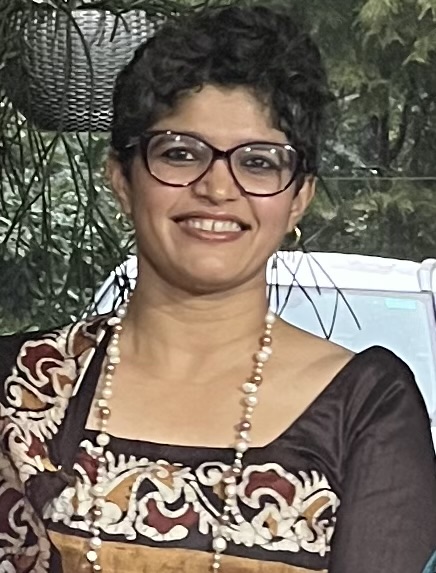
Dr Sowmya Dechamma (in picture), Fulbright scholar and Professor at the Centre for Comparative Literature, University of Hyderabad, in a research paper titled ‘Of Death, Rituals, and Songs for the Dead: Kodavas and their Histories’, says: “Nowhere do the songs mention any kind of transcendental discourse or philosophise about death. This has to be noted because Brahmanic Hindu philosophy is very concerned about rebirth and philosophises the aftermath of death in a major way, the concept of heaven and hell being a small part in it.
“In fact, the song for the dead urges the deceased not to be reborn. But these songs for the dead of the Kodavas not only do not mention ‘the other worldly’ things, but instead mention what matters in the lifetime, the materiality of living and living well, the problems, pleasures, ‘small’ traditions, ‘small’ resistances, ‘small’ heroics and ‘smaller’ histories.
“Yet at other places, the song for the dead tells us about the crops that are grown, the labour that goes into agriculture, about harvesting, and the fluid gender roles that do not conform to the conventional inner/outer domain, about life-histories, histories of the community and so on.”
Interestingly, Kodavas do not have the caste system, and Brahmins do not officiate in their functions. In fact, till the 1941 census, Kodavas were not part of the Hindu category.
The government of Karnataka has bracketed them under the ‘Other Backward Classes’ (OBC), which falls under the Shudra/low category under the Hindu caste system.
In the circumstances, the Kodava Samaja premises should not be misused by promoting the practices of Sanatana Dharma.
Source: Are Kodavas (Coorgs) Hindus? by P.T. Bopanna, Rolling Stone Publications, 2018. The paperback copy of the book is available on Flipkart:
https://www.flipkart.com/kodavas-coorgs-hindus/p/itm5684a96d854b3