


By Gita Chengappa Chodumada
As a technologist by profession, engaged in deep tech innovation developmentand deployment, I have always been curious about how science and research can help unravel questions that have intrigued us for generations. I picked up P.T. Bopanna’s book, ‘Who Are the Kodavas (Coorgs)?’ primarily out of personal curiosity as a Kodava, to understand our roots, ancestry and the origins of our distinctive identity. I am neither a specialist in genetics nor trained in biological sciences, so this review is therefore not intended as an academic assessment of the research, but rather a reader’s appreciation of the book and the fascinating scientific insights on the complex history of human migrations and admixture and of wider population histories.
The question of who the Kodavas are, where they originated and what makes them a distinct community has intrigued generations. What makes this book particularly interesting is that it brings together several research initiatives and perspectives, tracing the efforts made over decades to unravel the missing links in Kodava ancestry. It is not simply an account of one scientific study, but a documentation of a continuing quest involving individuals, researchers and institutions, who have pursued this subject with considerable dedication.
The centrepiece of the book is undoubtedly the Chapter on, ‘Origin of Kodavas, early Genetic leads’, by Prof. B.K. Thelma focusing on her recent, co-authored research paper, “Unique Demographic History and Population Substructure among the Coorgs of Southern India”, published in Communications Biology in May 2025. This significant genetic study identified three distinct genetic subgroups – Coorg 1: the Older ancestral population, Coorg 2: the Mixed ancestral population (admixture of Coorg 1 and Coorg 3) and Coorg 3: the Genetically distinct population.
This reveals a complex demographic history involving migration, population isolation and subsequent intermixing. The findings indicate ancestral contributions from South Asian, Eurasian and Middle Eastern populations and suggest that the present-day Coorg population evolved through the coming together of genetically differentiated groups over several generations. The researchers suggest that male-mediated migration followed by assimilation with local women, may have played a role in the community’s demographic history. These findings provide new insights into Kodava ancestry, although they do not conclusively establish a single geographical origin or settle all questions surrounding the community’s historical roots.
An equally thought-provoking contribution is the chapter on Kodava Ancestry and Cultural identity, by Prof. Veena Poonacha, which brings an interesting socio-cultural perspective to the genetic findings. She draws attention to the scope for further exploring the relationship between the genetic heritage of the Kodavas and their distinctive socio-cultural traditions. This opens up an interesting avenue for interdisciplinary research, bringing together genetics, anthropology, history and cultural studies to better understand how ancestry, migration and population interactions may have influenced the evolution of the community’s unique identity, customs and traditions.
Bopanna has deftly integrated chapters into the book, on extant theories and earlier scientific study efforts as well as the emerging clarity from the present Genetic study. The chapter, In Search for Missing Links, is particularly noteworthy as it brings to light earlier DNA research initiatives undertaken by Lt. Gen. B.C. Nanda and others associated with the Kodagu Natural Sciences Research Society, who commissioned Dr. M.A. Abdul Kalam of the University of Madras to undertake an investigation into Kodava ancestry. It also acknowledges the efforts of Dr. M.M. Chengappa, a respected educationist. These early initiatives reflect the sustained interest within the community to move beyond oral traditions and historical narratives and seek scientific insights into our ancestral roots.
Another interesting chapter on the American Research Paper, ‘Integrating genetic and oral histories of Southwest Indian populations’, documents the US Kodava Genome Initiative, initiated by genome scientists, Arjun Biddanda and Kodira Dilip Chinappa and Professor in Medicine, Anjaparavanda P Naren, among others. This collaborative effort brought together genome scientists and anthropologists to investigate the ancestry of the Kodavas. The paper, uploaded on BioRxiv in July 2022, provided an important first reference for Kodava genome research.
What I found particularly valuable about this book, is the way it weaves together research efforts spanning several decades and presents the evolution of our understanding of Kodava ancestry. It also highlights the contributions of individuals who have pursued this quest, often through their own initiative, resources and commitment. The subject is fascinating because it takes us beyond familiar historical narratives and encourages us to look at our origins through the lens of scientific enquiry, while recognising that much remains to be still explored, progressively, through more collaborative efforts and the application of modern scientific techniques.
The Author deserves appreciation for bringing these diverse strands of research and perspectives together in one publication and making a subject of considerable interest to the Kodavas, accessible to a wider readership. The book raises intriguing questions, offers fresh insights and perhaps most importantly, encourages us to continue the search for answers, particularly for the younger generations seeking a deeper understanding of their roots, as well as for anyone interested in the history, ancestry and cultural diversity of Coorg. The quest to understand who we are, how our identity, traditions and cultural heritage have evolved, remains an ongoing journey and this book is a meaningful initial step in that direction.
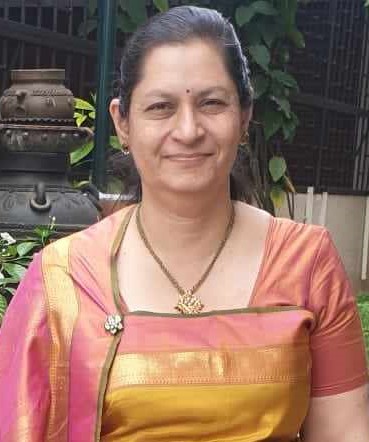
Gita Chengappa Chodumada (thamane Codanda) (in picture) heads the operations of the Chennai Innovation and Technology Incubation Centre, an initiative of TREC-STEP.
An electrical engineer from UVCE, Bangalore and an MBA, Gita has been trained in Technology Entrepreneurship promotion at the Haas School of Business, University of California, Berkeley, and has studied various renowned incubation eco-systems across Europe, USA, China and other parts of the globe.